Mind & Behaviour

Ten essential books on why we think, feel, and act the way we do

Understanding why we think, feel, and act the way we do is one of the oldest and most practical questions a person can pursue. The books on this list approach that question from different angles — neurobiology, economics, evolutionary psychology, philosophy of mind, and clinical practice — but they share a common conviction: that human behaviour is not random, and that its patterns, once understood, reveal something fundamental about who we are.

What connects these titles is a refusal to settle for simple explanations. Whether it is Kahneman mapping the architecture of cognitive bias, Sapolsky tracing a single act of aggression back through hormones, development, and evolution, or McGilchrist arguing that the divided brain has shaped Western civilisation itself, each author shows that behaviour emerges from layers of cause — neurological, cultural, historical — that interact in ways that resist reduction.

This is a list for readers drawn to ideas with real stakes: books that don't just describe the mind but demand that you examine your own. Some are dense and require patience; others are accessible and almost immediately unsettling in how recognisable their findings are. All of them reward the reader who is willing to bring some critical distance to the claims, and all of them will leave that reader with a sharper, more honest account of why people do what they do.

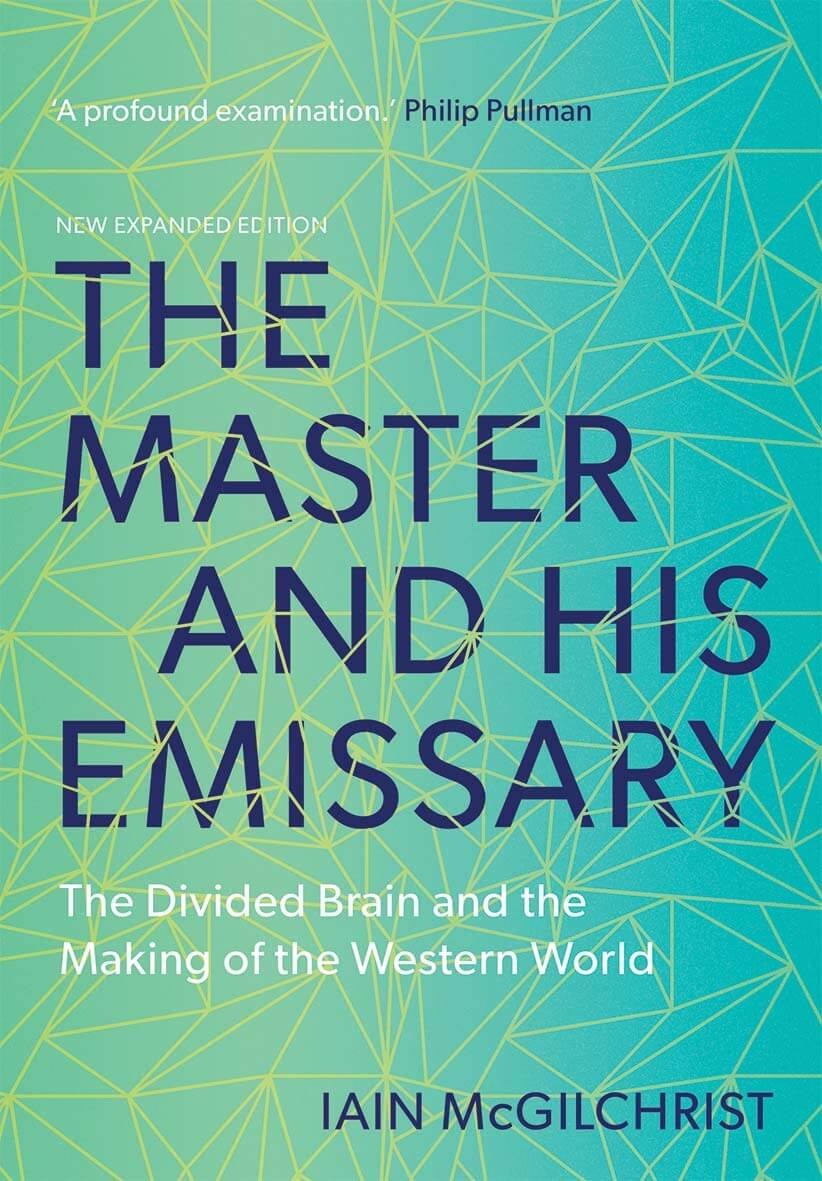
The Master and His Emissary: The Divided Brain and the Making of the Western World

The Master and His Emissary: The Divided Brain and the Making of the Western World

by Iain McGilchrist

McGilchrist's central claim is more subtle than the pop-science cliché it superficially resembles: the hemispheres don't divide tasks, they divide ways of attending to the world. The left hemisphere grasps things in fixed, abstract, decontextualised form; the right holds them in living, relational, embodied context. The first half of the book makes this case through neurology, ethology, and phenomenology with genuine rigour. The second half — tracing how left-hemisphere dominance warps successive eras of Western culture — is more polemical, and readers willing to hold the argument at some critical distance will get the most from it. The writing is dense but never careless; McGilchrist reads across disciplines and it shows in the texture of his examples. This rewards readers comfortable with philosophy of mind and willing to sit with a speculative thesis that cannot be proved, only illuminated. It is not a book for those who want clean conclusions.
4.35
Neuroscience
Philosophy
Cultural History
Challenging
Reflective
Thought-provoking
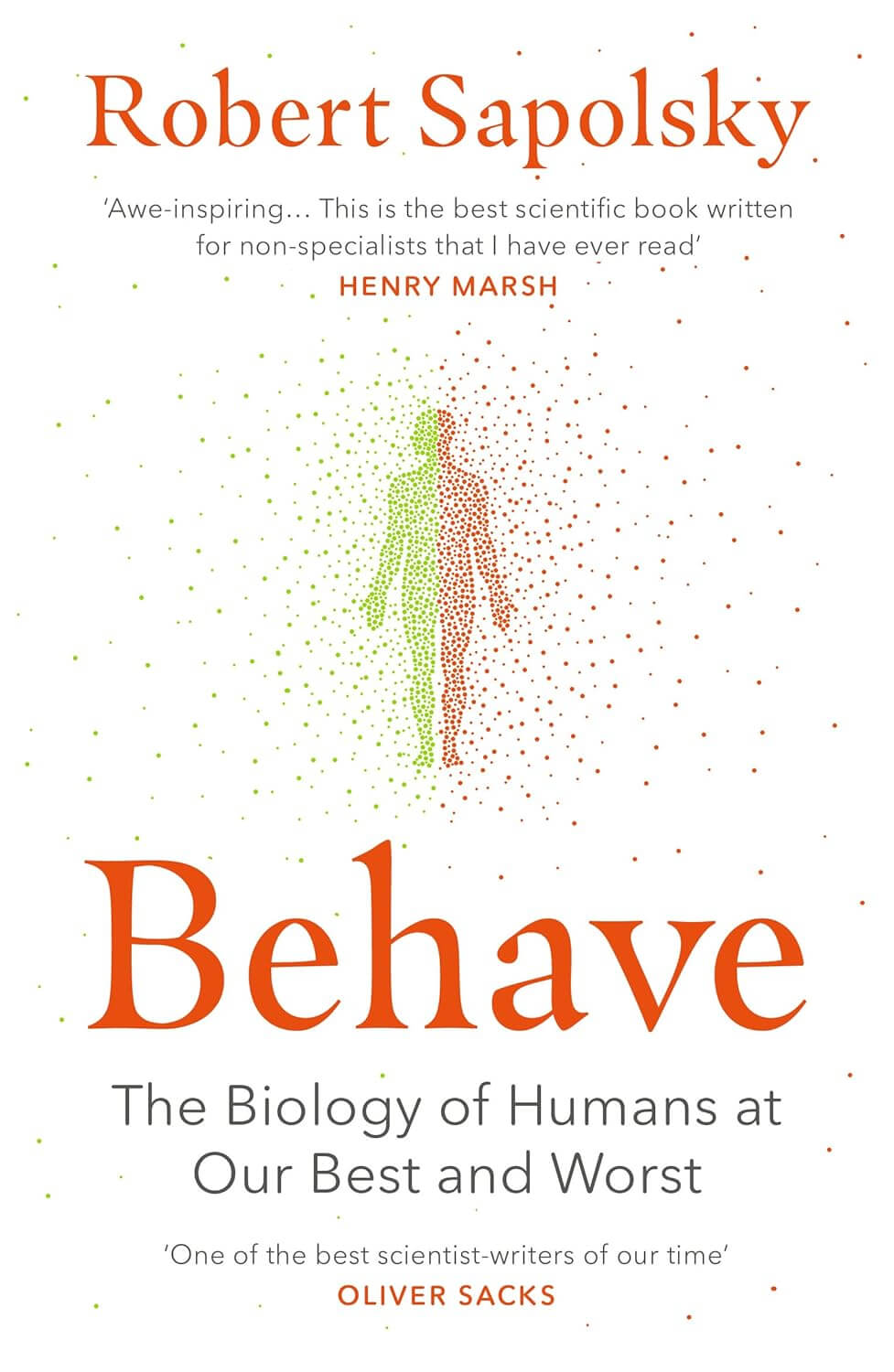
Behave: The Biology of Humans at Our Best and Worst

Behave: The Biology of Humans at Our Best and Worst

by Robert Sapolsky

Sapolsky's central structuring move — beginning at the moment of a behaviour and working backward through biology, hormones, development, culture, and evolution — is genuinely well-chosen. It prevents the reader from settling into any single explanatory frame for more than a chapter before the ground shifts. The writing is dense but rarely dry; Sapolsky has a researcher's instinct for the counterintuitive result and a teacher's habit of returning to concrete examples. The book is at its best in its middle sections on hormones and development, where the science is clearest and the implications most surprising. The final chapters, where Sapolsky turns determinist philosopher, are more uneven — the argument against free will and for criminal justice reform is earnest but becomes repetitive. At nearly 800 pages, this is a serious time commitment, and some chapters will test non-specialist patience. Readers who follow it through will find their assumptions about human nature durably altered.

4.38
Neuroscience
Popular Science
Behavioural Biology
Challenging
Illuminating
Thought-provoking
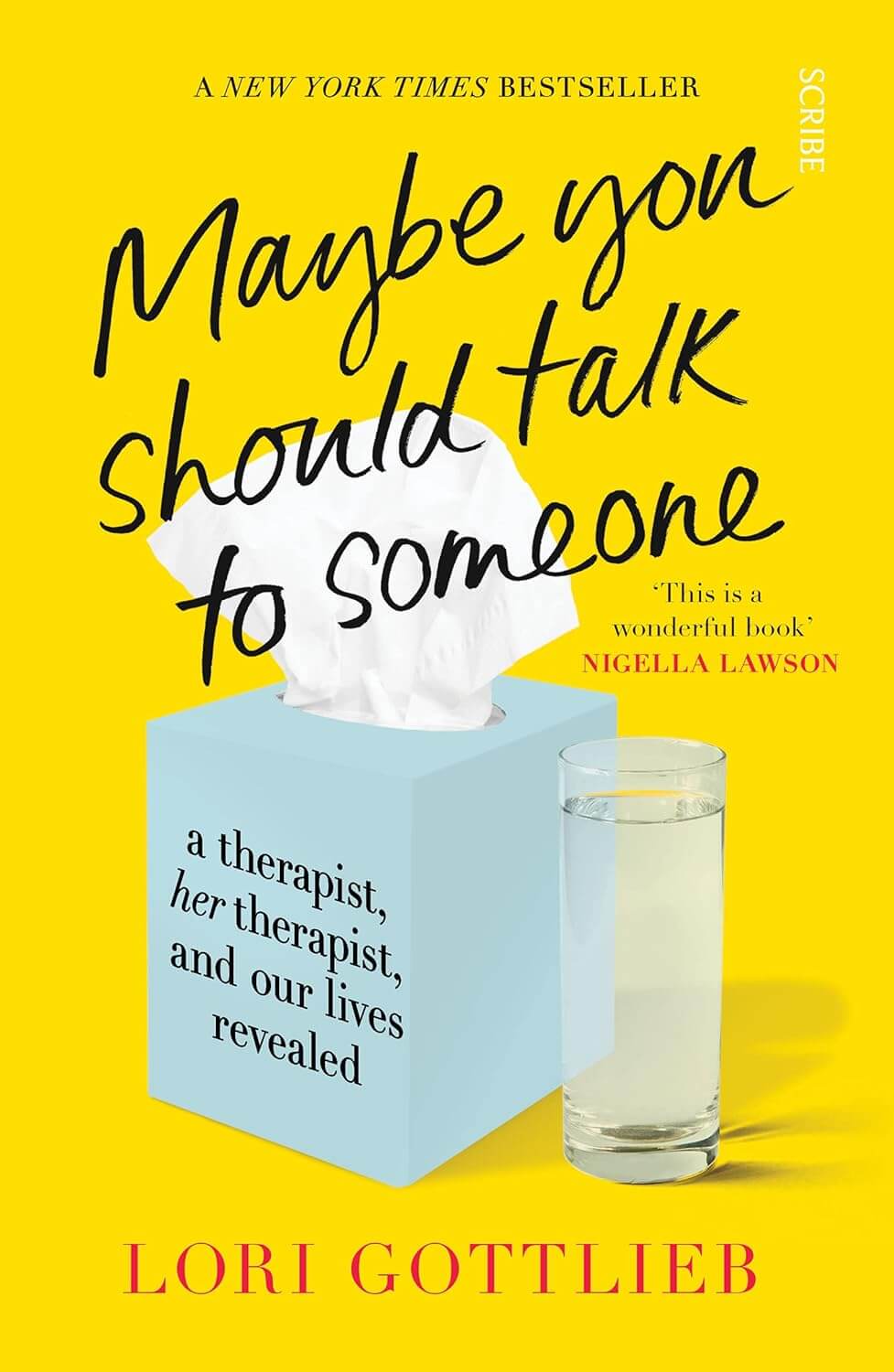
Maybe You Should Talk to Someone: A Therapist, Her Therapist, and Our Lives Revealed

Maybe You Should Talk to Someone: A Therapist, Her Therapist, and Our Lives Revealed

by Lori Gottlieb

Gottlieb's most effective move is refusing to stay behind the professional glass. When her long-term partner abruptly ends their relationship, she enters therapy herself — and the book gains its spine from this double exposure: she is simultaneously the person asking hard questions and the person unable to answer them. The four patient narratives are carefully chosen to represent different confrontations with the same core problem, which the book names explicitly and without apology: people resist changing even when their suffering is self-generated. The terminal-diagnosis storyline involving Julie is the most affecting, partly because death forces a clarity that the other characters spend the whole book avoiding. Gottlieb draws on existential therapy (Irvin Yalom is an acknowledged influence) without the material becoming academic. The middle sections lose momentum as the case studies accumulate, but the structural payoff — all four patients arriving at their turning points in roughly the same window — is earned. Best suited to readers willing to be implicated.

4.37
Memoir
Psychology
Self-Help
Reflective
Warm
Illuminating
Thinking, Fast and Slow

Thinking, Fast and Slow

by Daniel Kahneman

Kahneman's central organising device — two notional systems of thought, one fast and instinctive, one slow and deliberate — is a heuristic rather than a neuroscientific claim, and he is generally honest about that. What the framework does is give the reader consistent vocabulary for a wide-ranging survey of cognitive bias: anchoring effects, the planning fallacy, loss aversion, the distortions of the remembering self. The writing is precise without being cold; Kahneman works through experiments in a way that invites self-examination rather than detached observation. Some of the priming research in the book's middle section has since failed independent replication, and readers should approach those chapters with corresponding caution. The core material on judgment under uncertainty, drawn from Kahneman and Amos Tversky's own foundational work, remains well-evidenced and intellectually rigorous. It rewards patient, critical readers over those looking for quick mental models to deploy. The final section on the experiencing versus remembering self is quietly the book's most unsettling.

4.17
Psychology
Behavioural Economics
Popular Science
Thought-provoking
Challenging
Illuminating
The Man Who Mistook His Wife for a Hat

The Man Who Mistook His Wife for a Hat

by Oliver Sacks

Sacks structures this collection around a taxonomy of neurological experience — losses, excesses, transports — which gives what could easily be a cabinet of curiosities a genuine intellectual spine. The title case, in which a man with visual agnosia navigates the world entirely through music and gesture, is not just clinically striking but philosophically precise: Sacks uses it to examine how identity persists when perception fails. His prose is unhurried and essayistic, borrowing from Luria's romantic neurology while drawing in Wittgenstein and music theory without academic awkwardness. The book rewards readers willing to treat anecdote as a legitimate mode of inquiry. Where it demands some critical distance is in its framing of patients as figures of wonder — the gaze, though compassionate, can veer toward the theatrical. Still, Sacks's central insistence that the subject of neurology is not a brain but a person remains the book's most durable and necessary contribution.

4.05
Neuroscience
Medicine
Popular Science
Reflective
Illuminating
Thought-provoking
Flow: The Psychology of Happiness

Flow: The Psychology of Happiness

by Mihaly Csikszentmihalyi

Flow earns its reputation not through elegant prose but through the unusual integrity of the science behind it. Csikszentmihalyi's Experience Sampling Method — paging thousands of participants to record their mental states at random moments across years — gives the book an empirical backbone rare in popular psychology. The core insight is both simple and genuinely clarifying: happiness correlates not with ease or pleasure but with full engagement in tasks that sit at the edge of one's competence. The book is most compelling in its middle sections, where flow is traced across radically different domains — surgery, chess, rock climbing, conversation — revealing consistent structural conditions regardless of content. The later chapters, which reach toward life philosophy and cultural renewal, are more speculative and less persuasive. The writing is workmanlike rather than vivid, which is a real limitation given the subject matter. Readers who engage with it as a framework for self-examination, rather than a narrative, will find the most value.

4.11
Psychology
Popular Science
Self-Help
Illuminating
Reflective
Thought-provoking
Predictably Irrational: The Hidden Forces That Shape Our Decisions

Predictably Irrational: The Hidden Forces That Shape Our Decisions

by Dan Ariely

Ariely's great contribution is not just describing irrational behaviour but demonstrating that it is patterned — the same cognitive traps fire reliably across different populations and contexts. The experiment on arbitrary coherence, where subjects asked to recall the last two digits of their social security number before bidding on wine predictably anchor their bids to those random numbers, is the kind of finding that genuinely unsettles a reader's confidence in their own judgment. The chapter on social versus market norms is the book's strongest, showing with surgical clarity how introducing money into a relationship governed by goodwill destroys something that money cannot then restore. Ariely writes with dry wit rather than evangelical energy, which keeps the didactic structure from becoming exhausting. The weakness is structural: each chapter resets rather than builds, so the book accumulates evidence rather than developing argument. Readers who want rigorous synthesis will need to look further. Those willing to let well-designed experiments speak for themselves will find it consistently rewarding.

4.12
Behavioural Economics
Psychology
Popular Science
Illuminating
Thought-provoking
Accessible
Nudge: Improving Decisions About Health, Wealth, and Happiness

Nudge: Improving Decisions About Health, Wealth, and Happiness

by Richard Thaler & Cass Sunstein

Nudge is most valuable not as a policy manual but as a reorientation of how to think about human behaviour. Thaler and Sunstein's central provocation — that there is no neutral way to present a choice, and that every default is a policy — is genuinely clarifying and has influenced institutional design far beyond academia. The book's strength is its range of concrete examples: the cafeteria food arrangement, automatic pension enrolment, and organ donation opt-out systems all illustrate the core insight with satisfying precision. Where it strains is in its political philosophy. The term libertarian paternalism does considerable work and draws significant scrutiny — the authors are more persuasive describing the problem than resolving the ethical tension at its heart. The writing is brisk and accessible, occasionally at the cost of depth. Readers looking for a primer on behavioural economics applied to real-world institutions will find it rewarding; those expecting rigorous policy evaluation will need to look elsewhere.

3.84
Behavioural Economics
Psychology
Public Policy
Thought-provoking
Accessible
Illuminating
The Status Game: On Human Life and How to Play It

The Status Game: On Human Life and How to Play It

by Will Storr

The Status Game works because Storr commits to a single idea and follows it further than feels comfortable. His central claim — that humans are fundamentally status-seeking animals and that almost all social conflict is downstream of threatened or denied status — is not original, but his synthesis is. He draws on evolutionary psychology, neuroscience, and sociology with genuine fluency, and the three-part framework (dominance, virtue, success) gives the book structural clarity that a lot of popular science lacks. Where the book earns its keep is in the later chapters on extremism and online culture, where the framework suddenly makes ugly behaviour legible without excusing it. Storr writes in clean, precise prose and avoids the breathless register that plagues the genre. The argument occasionally overreaches — status can't explain everything — but readers willing to stress-test a big idea will find this more intellectually honest than most books in this space.

4.11
Psychology
Sociology
Popular Science
Thought-provoking
Illuminating
Challenging
The Righteous Mind: Why Good People Are Divided by Politics and Religion

The Righteous Mind: Why Good People Are Divided by Politics and Religion

by Jonathan Haidt

Haidt opens with a disarmingly simple claim: we don't reason our way to moral conclusions, we feel them first and reason afterward. What follows is a rigorous, if occasionally overreaching, attempt to map the psychological architecture behind that intuition. The rider and elephant framework is the book's sharpest tool — the image of reason as a small rider atop a massive, instinct-driven elephant captures something most political discourse refuses to admit. Moral Foundations Theory is more contentious: the six-foundation model is genuinely illuminating when applied to why conservatives and liberals talk past each other, but Haidt's effort to validate all foundations as equally legitimate invites the charge of false equivalence. The third section, on groupishness and religion, is the most surprising and rewards patient reading. This is a book for people who want to understand political tribalism from the inside out, not to be reassured about their own side's correctness.

4.19
Psychology
Politics
Popular Science
Thought-provoking
Challenging
Illuminating