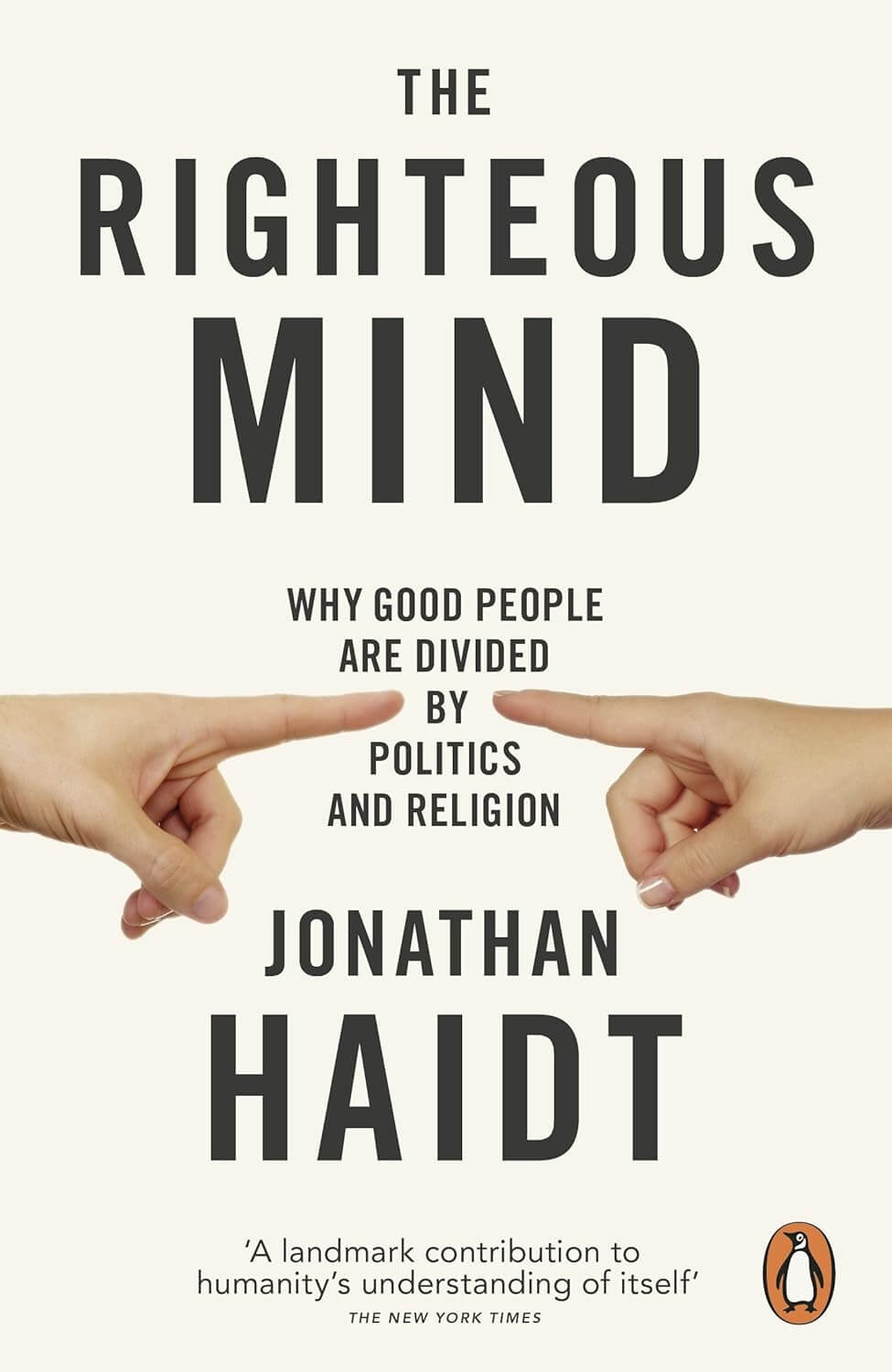
The Righteous Mind: Why Good People Are Divided by Politics and Religion
by Jonathan Haidt
Haidt opens with a disarmingly simple claim: we don't reason our way to moral conclusions, we feel them first and reason afterward. What follows is a rigorous, if occasionally overreaching, attempt to map the psychological architecture behind that intuition. The rider and elephant framework is the book's sharpest tool — the image of reason as a small rider atop a massive, instinct-driven elephant captures something most political discourse refuses to admit. Moral Foundations Theory is more contentious: the six-foundation model is genuinely illuminating when applied to why conservatives and liberals talk past each other, but Haidt's effort to validate all foundations as equally legitimate invites the charge of false equivalence. The third section, on groupishness and religion, is the most surprising and rewards patient reading. This is a book for people who want to understand political tribalism from the inside out, not to be reassured about their own side's correctness.