Nudge: Improving Decisions About Health, Wealth, and Happiness
by Richard Thaler & Cass Sunstein
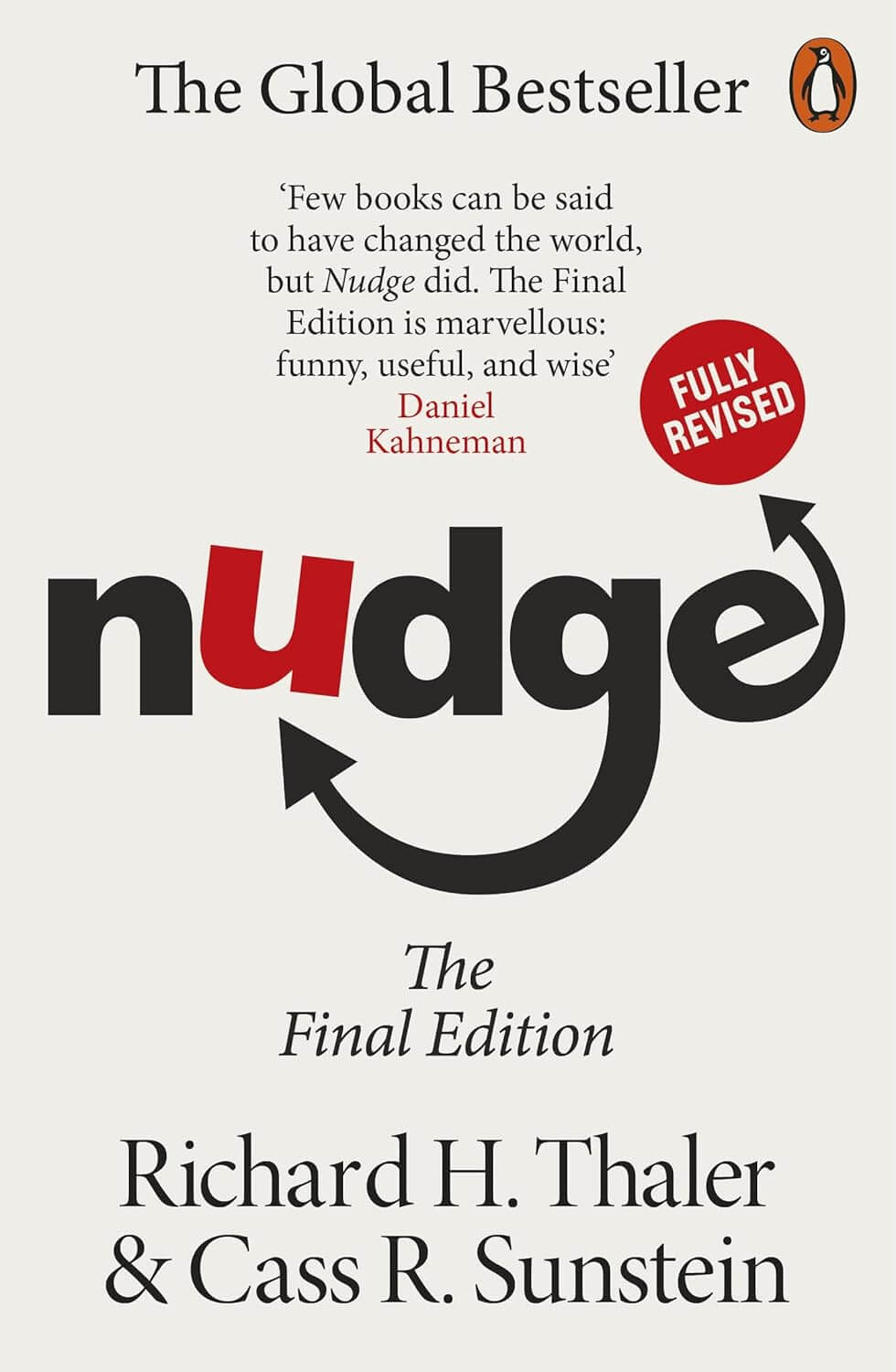
Nudge is most valuable not as a policy manual but as a reorientation of how to think about human behaviour. Thaler and Sunstein's central provocation — that there is no neutral way to present a choice, and that every default is a policy — is genuinely clarifying and has influenced institutional design far beyond academia. The book's strength is its range of concrete examples: the cafeteria food arrangement, automatic pension enrolment, and organ donation opt-out systems all illustrate the core insight with satisfying precision. Where it strains is in its political philosophy. The term libertarian paternalism does considerable work and draws significant scrutiny — the authors are more persuasive describing the problem than resolving the ethical tension at its heart. The writing is brisk and accessible, occasionally at the cost of depth. Readers looking for a primer on behavioural economics applied to real-world institutions will find it rewarding; those expecting rigorous policy evaluation will need to look elsewhere.