The Man Who Mistook His Wife for a Hat
by Oliver Sacks
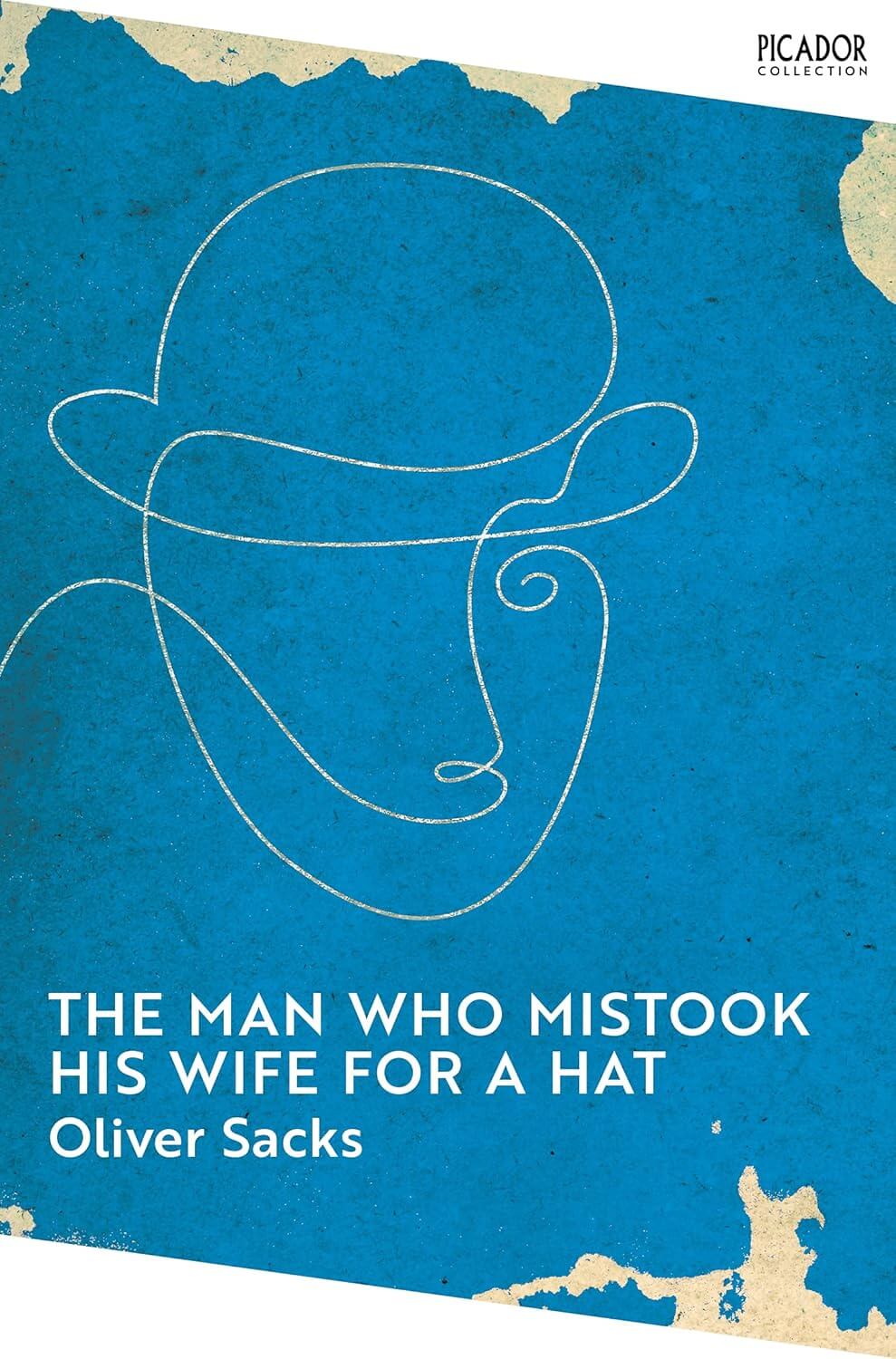
Sacks structures this collection around a taxonomy of neurological experience — losses, excesses, transports — which gives what could easily be a cabinet of curiosities a genuine intellectual spine. The title case, in which a man with visual agnosia navigates the world entirely through music and gesture, is not just clinically striking but philosophically precise: Sacks uses it to examine how identity persists when perception fails. His prose is unhurried and essayistic, borrowing from Luria's romantic neurology while drawing in Wittgenstein and music theory without academic awkwardness. The book rewards readers willing to treat anecdote as a legitimate mode of inquiry. Where it demands some critical distance is in its framing of patients as figures of wonder — the gaze, though compassionate, can veer toward the theatrical. Still, Sacks's central insistence that the subject of neurology is not a brain but a person remains the book's most durable and necessary contribution.