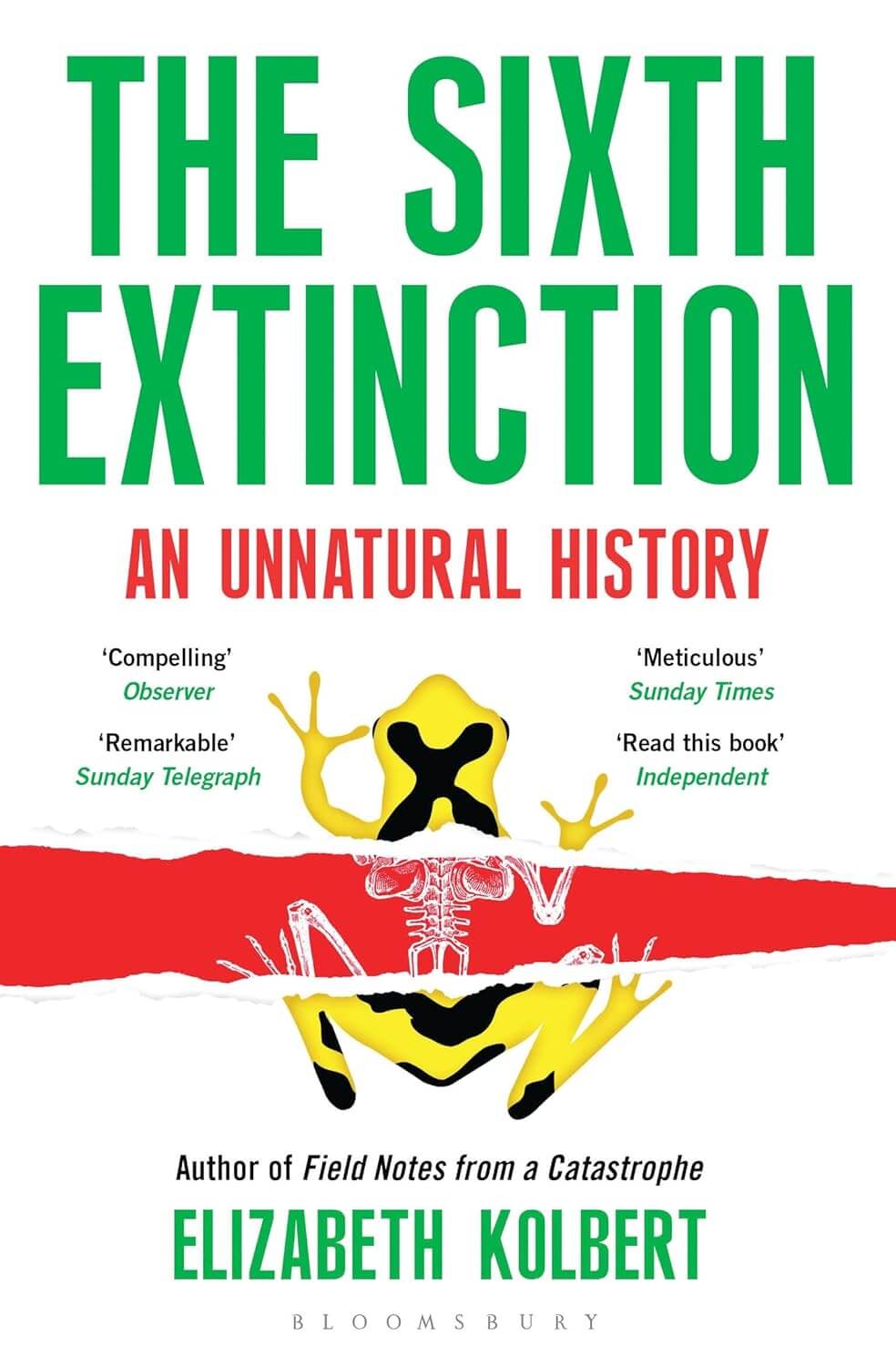
The Sixth Extinction: An Unnatural History
by Elizabeth Kolbert
Kolbert makes the science of mass extinction gripping and legible, showing how human activity is reshaping life on Earth at breathtaking speed. The book moves through field reporting, laboratory science, and deep time, connecting distant ecosystems to everyday choices. Kolbert writes with clarity and understated urgency, letting evidence accumulate into inevitability. The narrative introduces species and habitats with vivid specificity, which makes loss feel personal rather than abstract. Kolbert is also attentive to the history of scientific ideas, showing how we learned to recognize extinction in the first place. The book avoids easy moralizing, yet its implications are unmistakably ethical. Moments of wonder—strange creatures, resilient habitats—heighten the tragedy rather than soften it. The prose is accessible without being simplistic, making complex ecology readable for general audiences. You finish with a heightened sense of planetary fragility and human responsibility. It’s one of those books that changes your baseline awareness of the world. Essential, unsettling, and deeply compelling science writing.