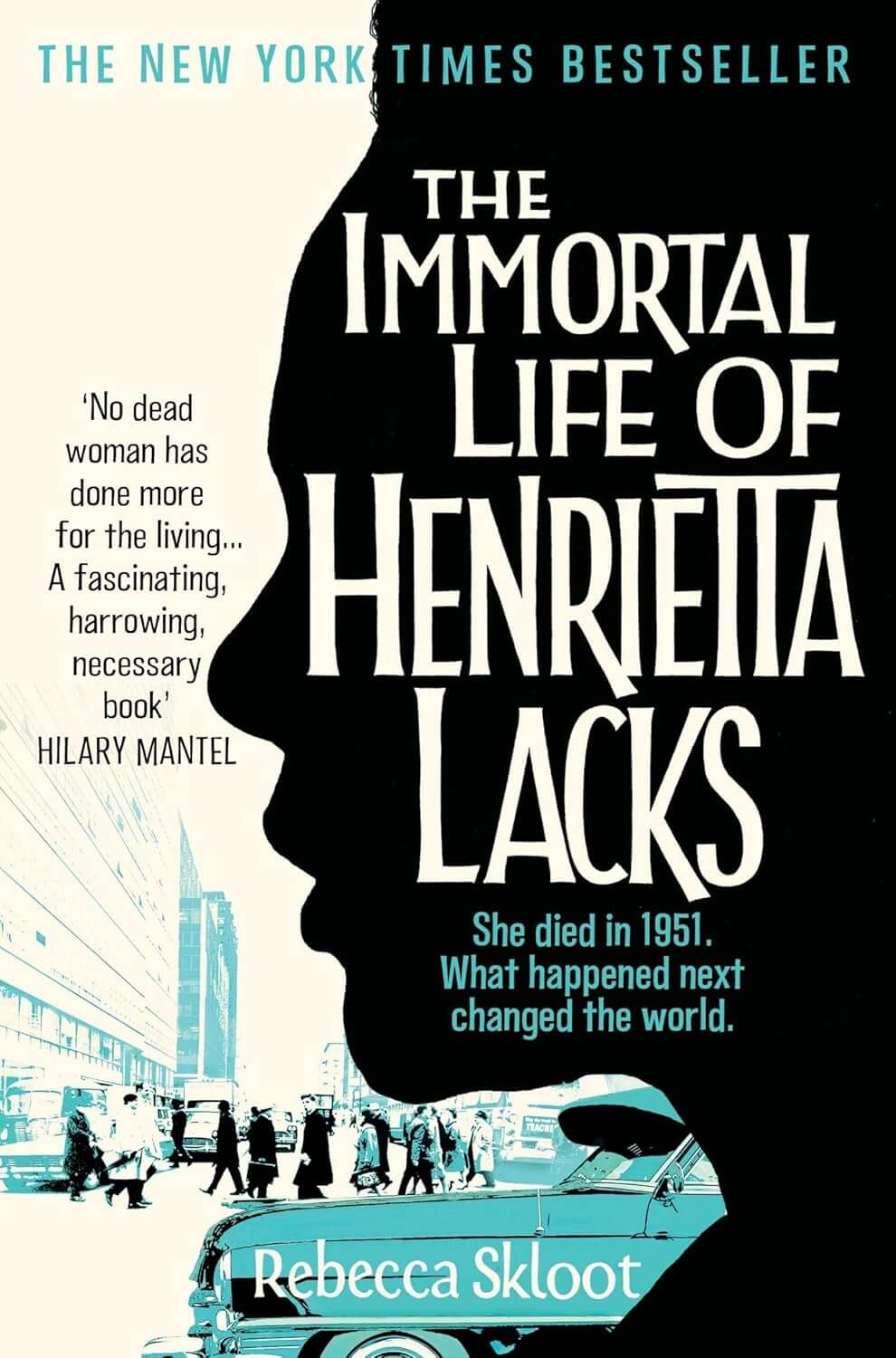
The Immortal Life of Henrietta Lacks
by Rebecca Skloot
Rebecca Skloot spent over a decade reporting this book, and that patience is visible on every page. The work interweaves three strands: the biology of HeLa cells and their pivotal role in twentieth-century medicine; the short life of the Black woman whose cancer cells were taken without consent at Johns Hopkins in 1951; and Skloot's investigative relationship with Lacks's daughter Deborah. The alternating structure — past and present — keeps science and human story in constant conversation. Skloot does not simplify the ethical questions the book raises: the 1951 harvesting was legal, and the questions of bodily autonomy and racial exploitation it surfaces remain unresolved in US law. Some critics noted that Skloot, as a white journalist profiting from the story, mirrors the original dynamic she documents — a tension the book acknowledges but cannot fully escape. Its real strength is rigour and empathy applied in equal measure to both the biology and the people who lived it.