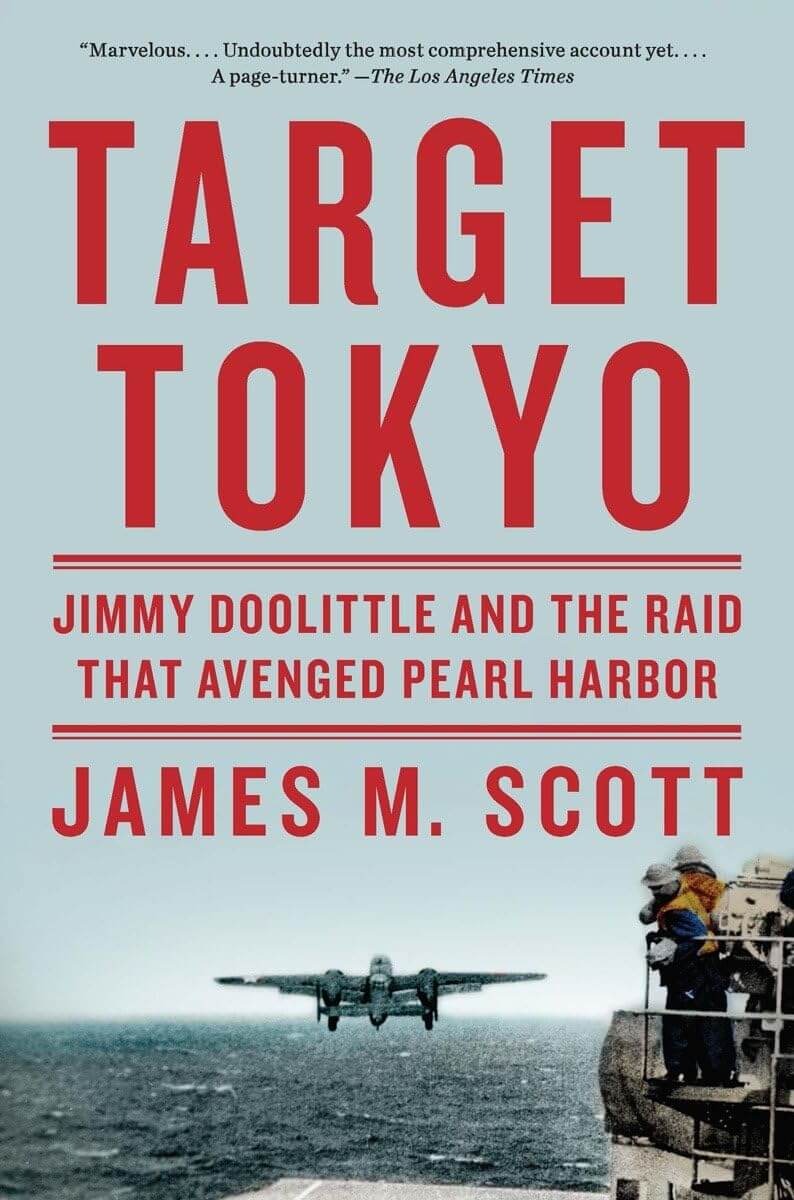
Target Tokyo: Jimmy Doolittle and the Raid That Avenged Pearl Harbor
by James M. Scott
Scott tells the story of the Doolittle Raid with cinematic momentum, combining operational detail with high-stakes narrative pacing. The book captures the audacity of the mission and the pressure for an early morale boost after Pearl Harbor. Scott is attentive to logistics—aircraft limitations, training, timing—making the raid’s success feel precarious rather than inevitable. The human dimension is strong: the courage of crews, the uncertainty of outcomes, and the emotional costs. The narrative also traces consequences beyond the spectacle, including the ripple effects in both the U.S. and Japan. Scott writes clearly, keeping military complexity accessible to general readers. The raid becomes a case study in wartime symbolism—how actions are designed not only to destroy but to signal. The pacing is propulsive without being shallow, and the book balances admiration with context. You finish with a vivid understanding of how myth and morale get built in war. A gripping piece of narrative military history.