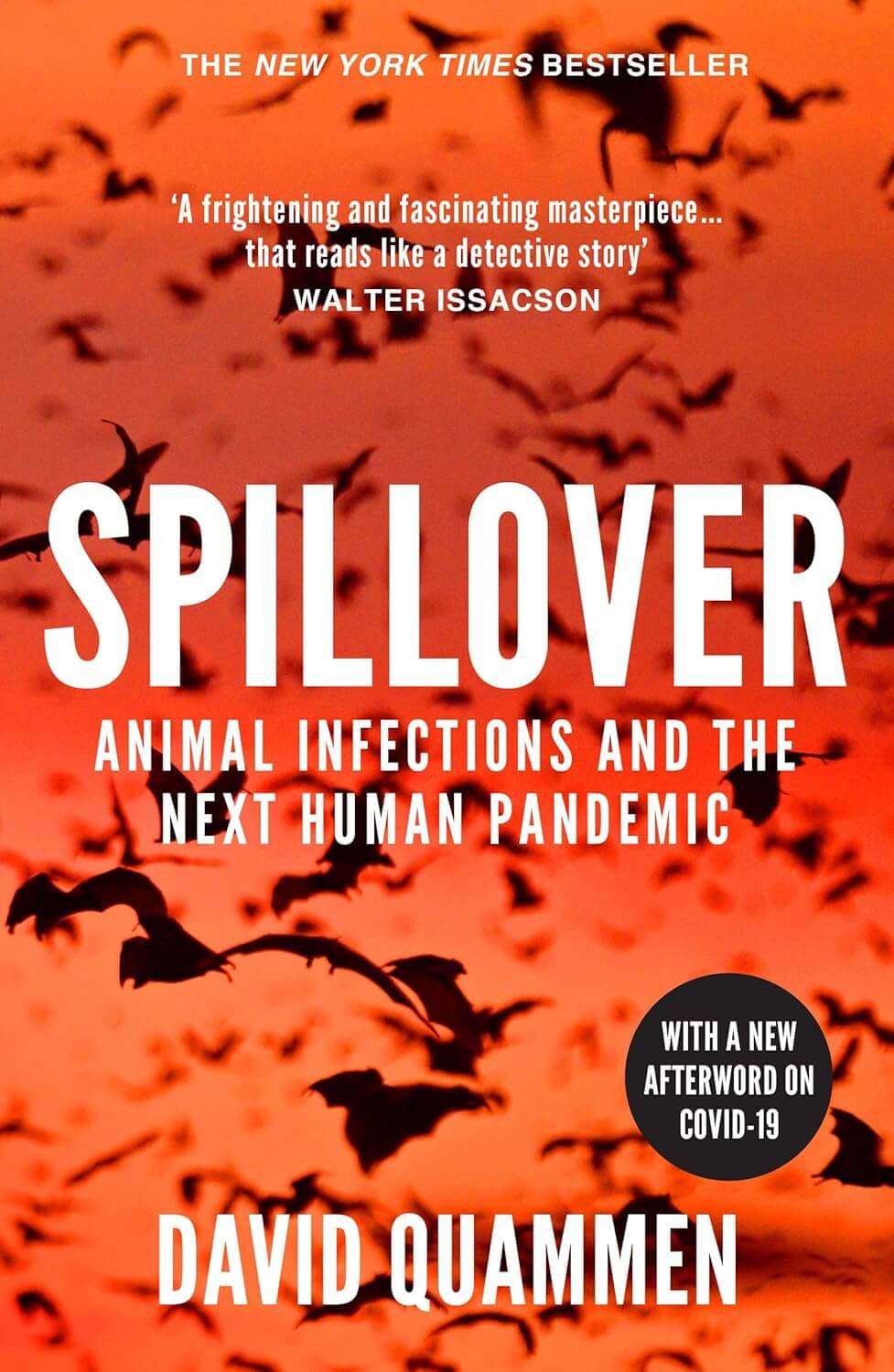
Spillover: Animal Infections and the Next Human Pandemic
by David Quammen
Published in 2012, Spillover reads differently after 2020: Quammen's careful account of how zoonotic diseases jump from animals to humans now feels less like science journalism and more like prophecy. Each chapter investigates a distinct pathogen — Ebola, Hendra, SARS, Nipah, HIV — following scientists into the field with unhurried precision. Quammen is a gifted observer; his descriptions of researchers working in remote forests and makeshift labs give the science a physical weight that most public health writing lacks. The book's central ecological argument — that habitat destruction creates the conditions for pandemic — is developed steadily across its considerable length. The episodic structure (several chapters originated as magazine articles) limits narrative momentum, and the ending avoids policy prescription. At nearly 600 pages it is a commitment. But as a documentary account of what spillover actually is at the level of virus, bat, and human contact — and why it keeps happening — the book remains the most rigorous popular treatment of the subject.