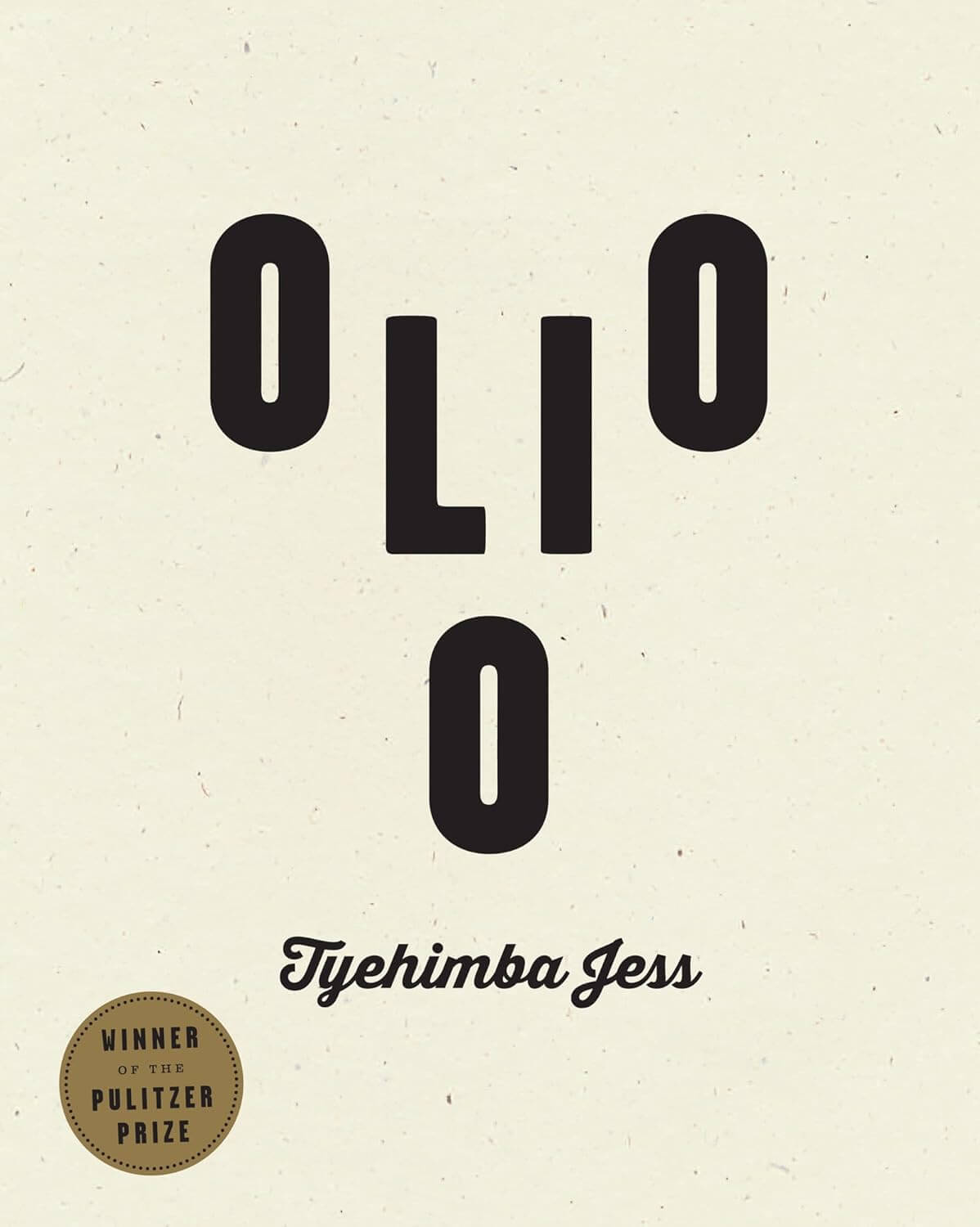
Olio
by Tyehimba Jess
Jess creates a formally daring, musically alive collection that resurrects and reimagines the voices of Black performers and creators. The book blends documentary research with poetic invention, making history feel present and voiced. Jess is especially inventive with form—braids, erasures, contrapuntal layouts—that mirror the layered nature of memory. The poems honor individuals while also exposing the structures that exploited them. There’s a deep attention to sound, rhythm, and performance; the work feels meant to be heard as much as read. Jess’s language is vivid and emotionally generous, balancing celebration with critique. The collection teaches without preaching, letting artistry carry argument. Reading it feels like stepping into an archive that suddenly starts singing. The book also challenges what the “canon” holds and who gets remembered. It’s moving, intellectually thrilling, and formally exhilarating. A standout example of poetry as historical restoration and creative justice.