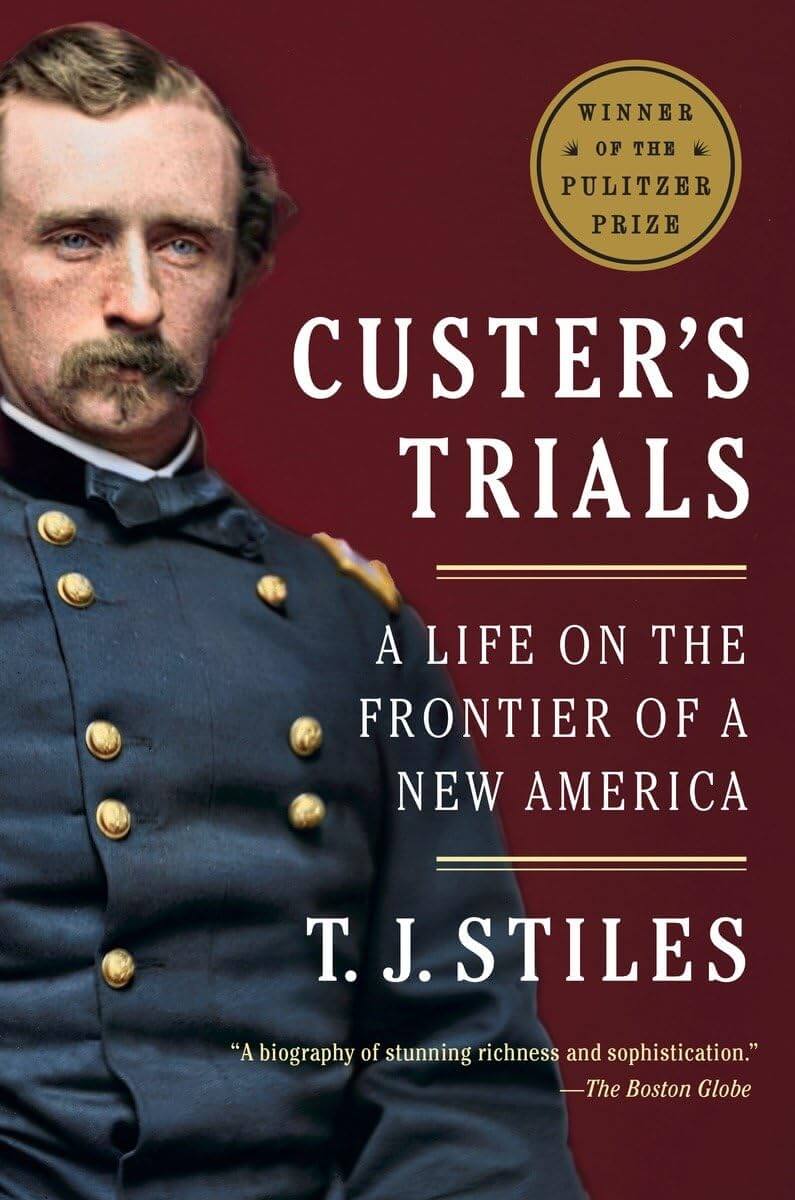
Custer's Trials: A Life on the Frontier of a New America
by T.J. Stiles
Stiles reexamines Custer by placing him within the turbulent systems of post–Civil War America: expansion, capitalism, and a nation remaking itself through conquest. Rather than treating Custer as pure villain or doomed hero, Stiles presents him as ambitious, opportunistic, and emblematic of a broader ideology. The book is richly detailed, connecting battlefield decisions to political and economic incentives. Stiles shows the frontier not as empty stage but as contested ground shaped by Indigenous resistance and U.S. policy. The narrative captures how celebrity and myth were manufactured even in Custer’s lifetime. Stiles writes with clarity and momentum, making complex context readable. The biography-history hybrid exposes how personal ambition and national project reinforced each other. The result is less a tale of one man’s hubris than a portrait of a country’s. You come away with a sharper sense of how expansion was justified and sold. A major reinterpretation of a central American myth.