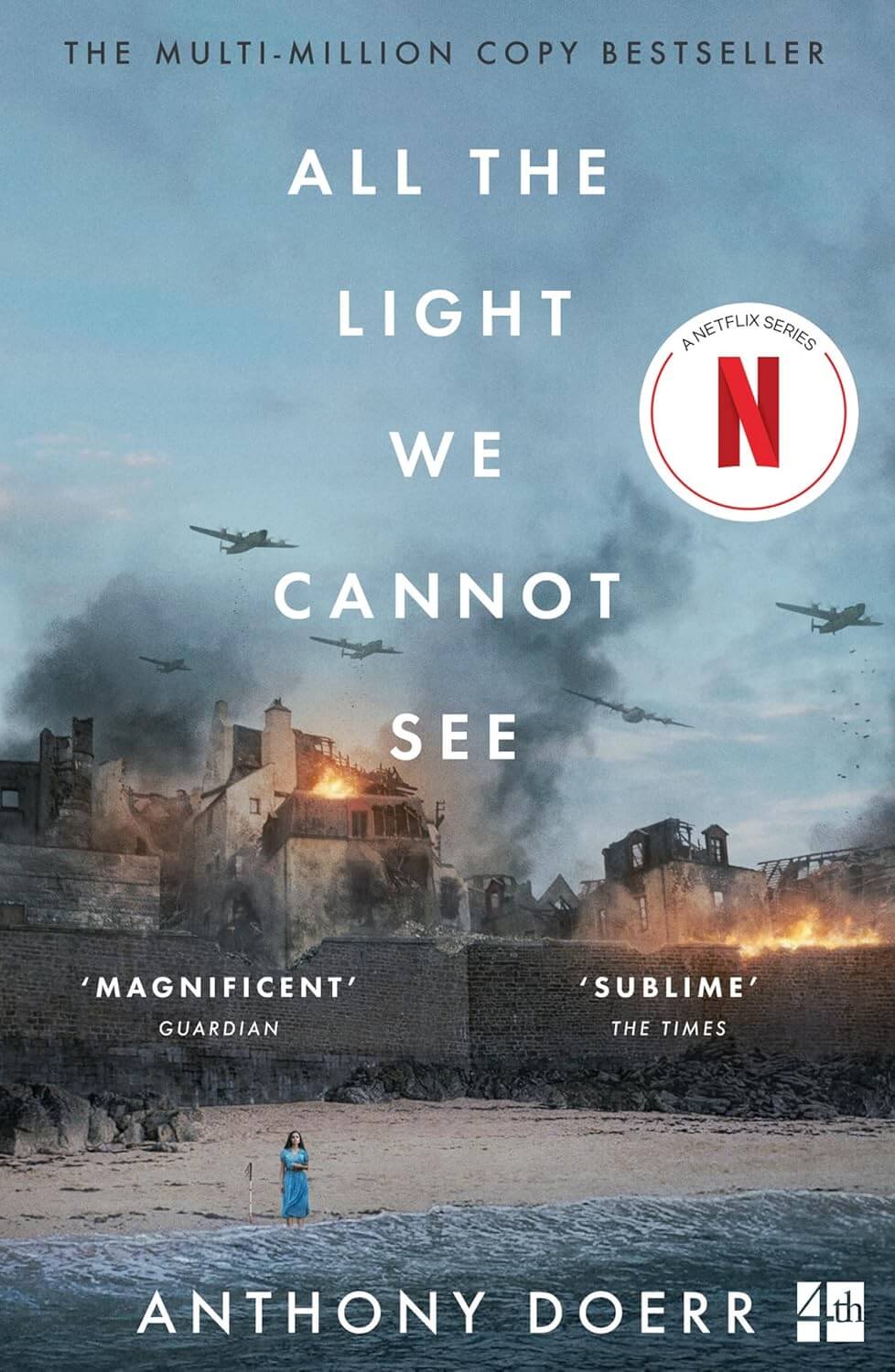
All the Light We Cannot See
by Anthony Doerr
Doerr’s novel is a beautifully engineered wartime story that braids together two young lives on opposite sides of World War II. One thread follows a blind French girl navigating occupied France; the other follows a German boy whose technical gifts pull him into the machinery of the regime. Doerr’s prose is luminous and tactile, especially in how it renders sound, touch, and the physical textures of a besieged world. The short chapters create momentum and a sense of inevitability, as if history is tightening around the characters. The book balances wonder—radio waves, shells, hidden rooms—with the grim realities of war. Doerr avoids simple moral binaries, showing how innocence can be coerced and courage can be quiet. The setting of Saint-Malo feels almost mythic, a stage where chance and choice collide. The emotional payoff is strong because the novel invests in small acts of humanity as forms of resistance. At times the structure is carefully orchestrated to the point of feeling fated, but the story remains deeply affecting. A tender, suspenseful novel about perception, survival, and the invisible connections between lives.