The Invisible World

Books that reveal the hidden systems shaping life, nature, technology, and the future

Much of what governs our lives is invisible. Microbes shape health and mood, fungi knit ecosystems together underground, trees communicate in ways we are only beginning to understand, and algorithms quietly influence decisions we make every day. The invisible world is not empty space—it is dense with signals, networks, codes, and relationships that structure the visible one.

The books in this list explore those hidden systems from many angles. Some focus on biology, uncovering the microbial and fungal lives that sustain bodies and landscapes. Others turn to information, networks, surveillance, and computation, showing how digital systems and mathematical logic increasingly shape human behavior, politics, and culture. Together, they reveal that the modern world is not only built from matter, but from patterns, connections, and flows of information.

What makes these books so compelling is their ability to make the unseen feel vivid and urgent. They invite readers to look beneath surfaces—into forests, immune systems, code, data, and the architecture of modern power. The result is a reading list that is both intellectually thrilling and quietly transformative, encouraging a new sense of wonder about the hidden forces all around us.

Immune: a Journey into the Mysterious System that Keeps You Alive

Immune: a Journey into the Mysterious System that Keeps You Alive

by Philipp Dettmer

Philipp Dettmer turns immunology into something vivid, clear, and genuinely exciting. With the help of strong metaphors and clean explanations, he makes the immune system feel like a complex but understandable world of defenders, invaders, signals, and responses. The book excels at scale, showing how countless tiny processes work together to keep us alive. Dettmer’s style is playful without becoming simplistic, and the illustrations add clarity and energy. The immune system, often invisible and ignored until it fails, becomes newly dramatic and awe-inspiring. He explains both the beauty and the danger of immune responses, from infections to allergies to autoimmune disease. The book encourages readers to appreciate the body as a dynamic system rather than a static object. It is particularly strong as an introduction because it prioritizes understanding over jargon. Readers come away not only informed but also newly amazed by the hidden labor happening within them at all times.

4.58
Popular Science
Biology
Medicine
Accessible
Awe-filled
Energetic
Entangled Life

Entangled Life

by Merlin Sheldrake

Merlin Sheldrake’s book is a lyrical and mind-expanding exploration of fungi and their role in the living world. He shows how fungal networks connect forests, decompose matter, alter minds, and challenge our ideas of individuality. The writing is unusually vivid for science nonfiction, moving between personal reflection, ecological insight, and philosophical speculation. Sheldrake has a gift for making mycelium feel not abstract but strange, alive, and almost uncanny. The book constantly expands the reader’s sense of what life can be. It is full of surprising examples, from psychedelic fungi to underground partnerships between plants and microbes. At its heart is the idea that life is built through entanglement rather than isolation. The prose can be meditative, but the scientific ideas remain sharp and grounded. This is a book that leaves readers feeling both more informed and more wonderstruck.

4.32
Popular Science
Biology
Nature Writing
Wonder-filled
Reflective
Strange
The Code Breaker: Jennifer Doudna, Gene Editing, and the Future of the Human Race

The Code Breaker: Jennifer Doudna, Gene Editing, and the Future of the Human Race

by Walter Isaacson

Walter Isaacson’s biography of Jennifer Doudna is also the story of CRISPR and the gene-editing revolution it helped unleash. The book combines personal portrait, scientific history, and ethical debate in a highly readable format. Isaacson is skilled at explaining complex discoveries through the people and rivalries behind them. Doudna emerges as brilliant, ambitious, and deeply aware of the moral stakes of her work. The narrative has the pace of a scientific thriller, especially in its account of competition and breakthrough. At the same time, the book makes room for the enormous ethical questions surrounding genetic intervention. What makes this science “invisible” is precisely what gives it power: code written into living cells. Isaacson helps readers grasp both the elegance of the science and the scale of its consequences. The result is an exciting and uneasy story about a technology that could transform medicine, agriculture, and humanity itself.

4.28
Biography
Popular Science
Genetics
Fascinating
Urgent
Thought-provoking
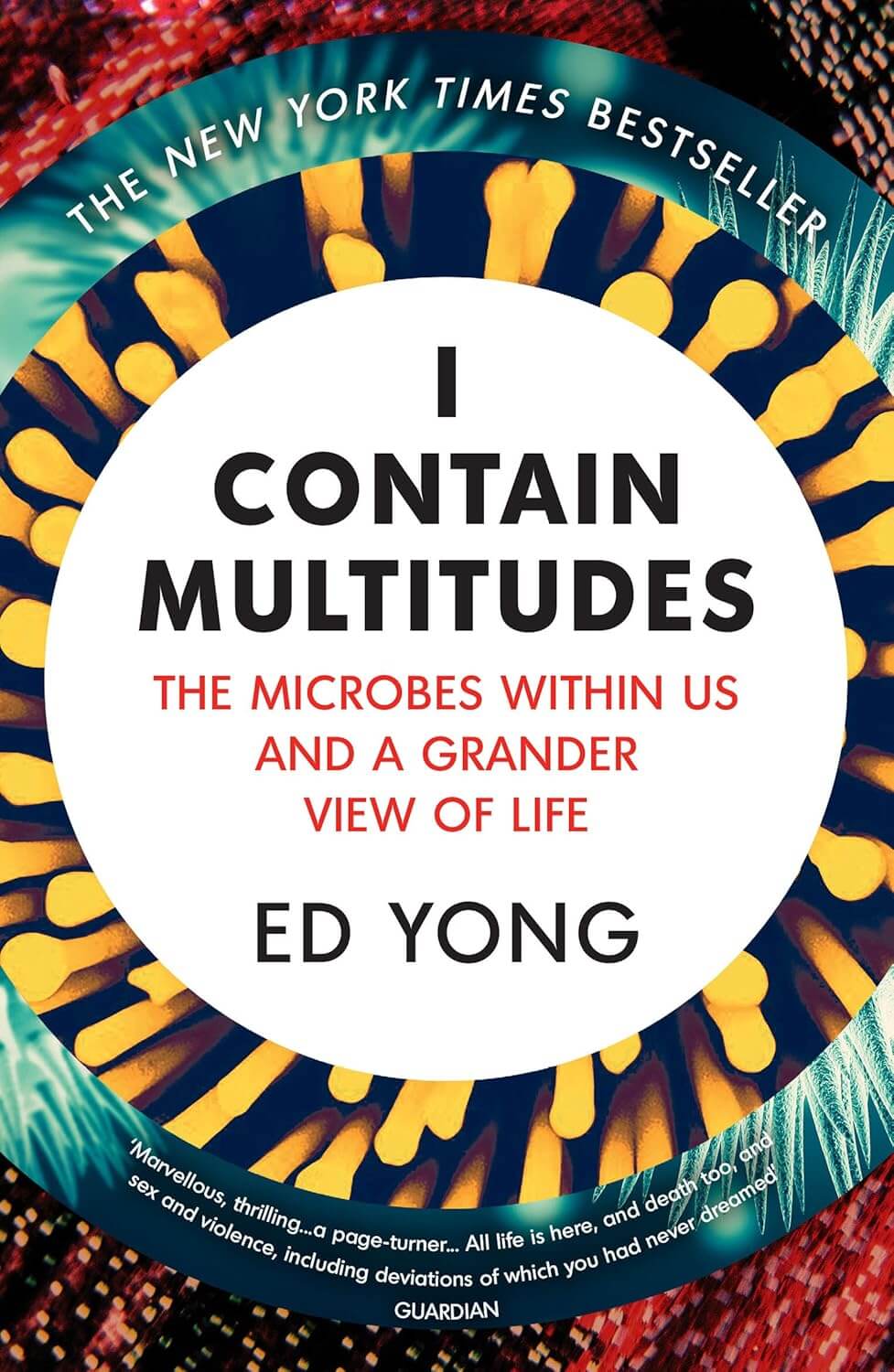
I Contain Multitudes

I Contain Multitudes

by Ed Yong

Ed Yong’s book is one of the most engaging introductions to the microbial world ever written. He shows that humans are not solitary beings but ecosystems, shaped constantly by bacteria, fungi, and other microscopic companions. Yong writes with clarity, wit, and genuine wonder, making complex science feel accessible without flattening it. Each chapter opens up a new dimension of symbiosis, from squid that glow with bacterial help to gut microbes that influence health and behavior. The book is especially strong at overturning simplistic ideas about germs as enemies. Instead, it presents life as a web of partnerships, dependencies, and constant negotiation. Yong’s storytelling keeps the science lively, and his examples are memorable and often astonishing. The result is a book that changes how readers understand bodies, evolution, and individuality itself. It is both scientifically rich and deeply humane in its view of life.

4.17
Popular Science
Biology
Nature
Awe-filled
Curious
Illuminating
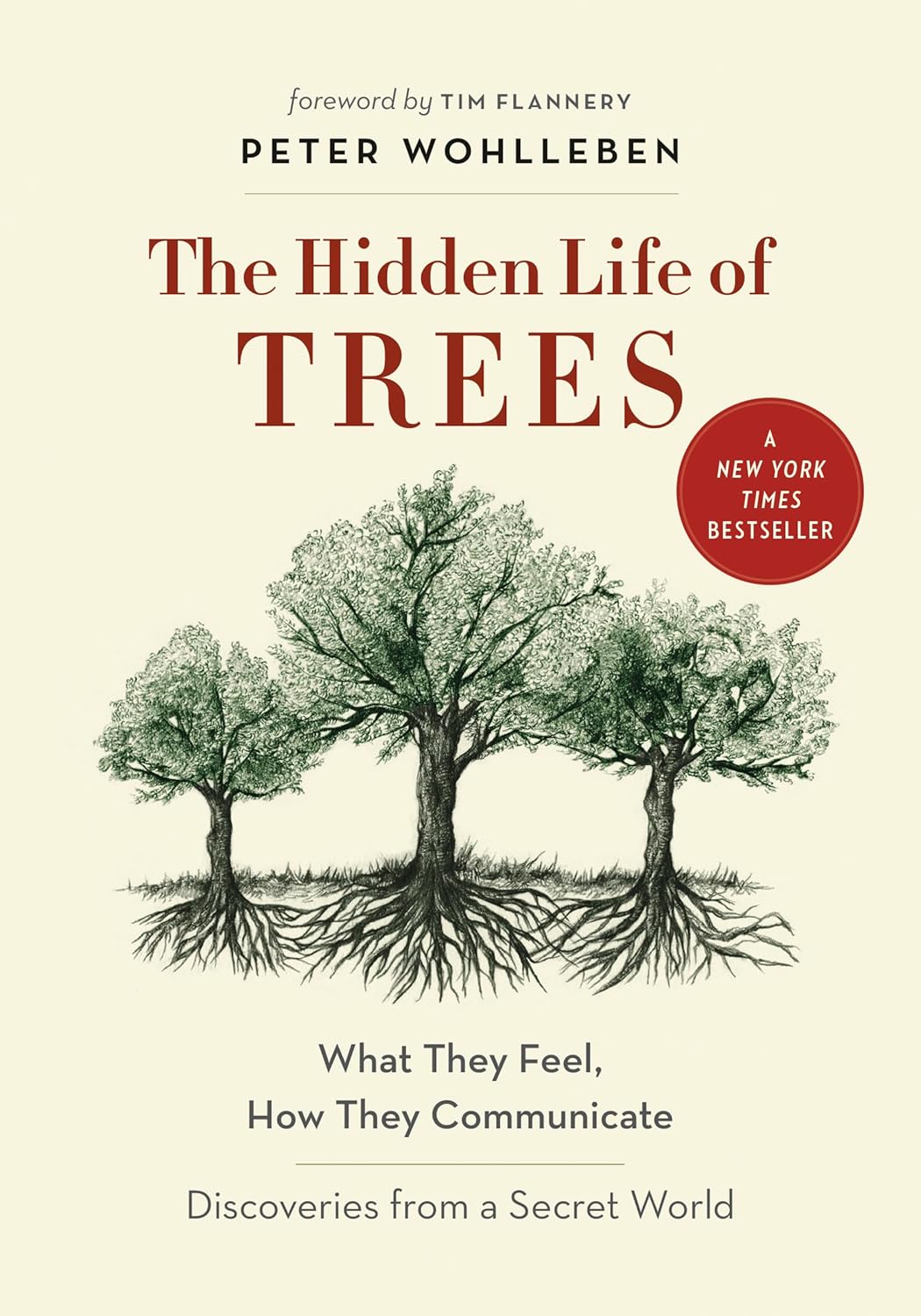
The Hidden Life of Trees

The Hidden Life of Trees

by Peter Wohlleben

Peter Wohlleben invites readers to see forests not as collections of individual trees but as social communities. Drawing on forestry experience and scientific research, he argues that trees communicate, cooperate, and support one another in subtle but meaningful ways. The book is written in a warm, conversational style that makes ecological complexity approachable. Wohlleben’s examples—parent trees nurturing saplings, roots linking together underground, forests responding collectively to stress—are both fascinating and emotionally resonant. Some readers may find his anthropomorphic phrasing a little bold, but it undeniably makes the subject vivid. More importantly, the book encourages a slower, more attentive way of looking at nature. Forests become dynamic systems rather than passive scenery. It’s a persuasive case for ecological interdependence and patience. The book has had enormous influence because it restores wonder to something many people take for granted.

4.06
Nature
Ecology
Popular Science
Gentle
Reflective
Enchanting
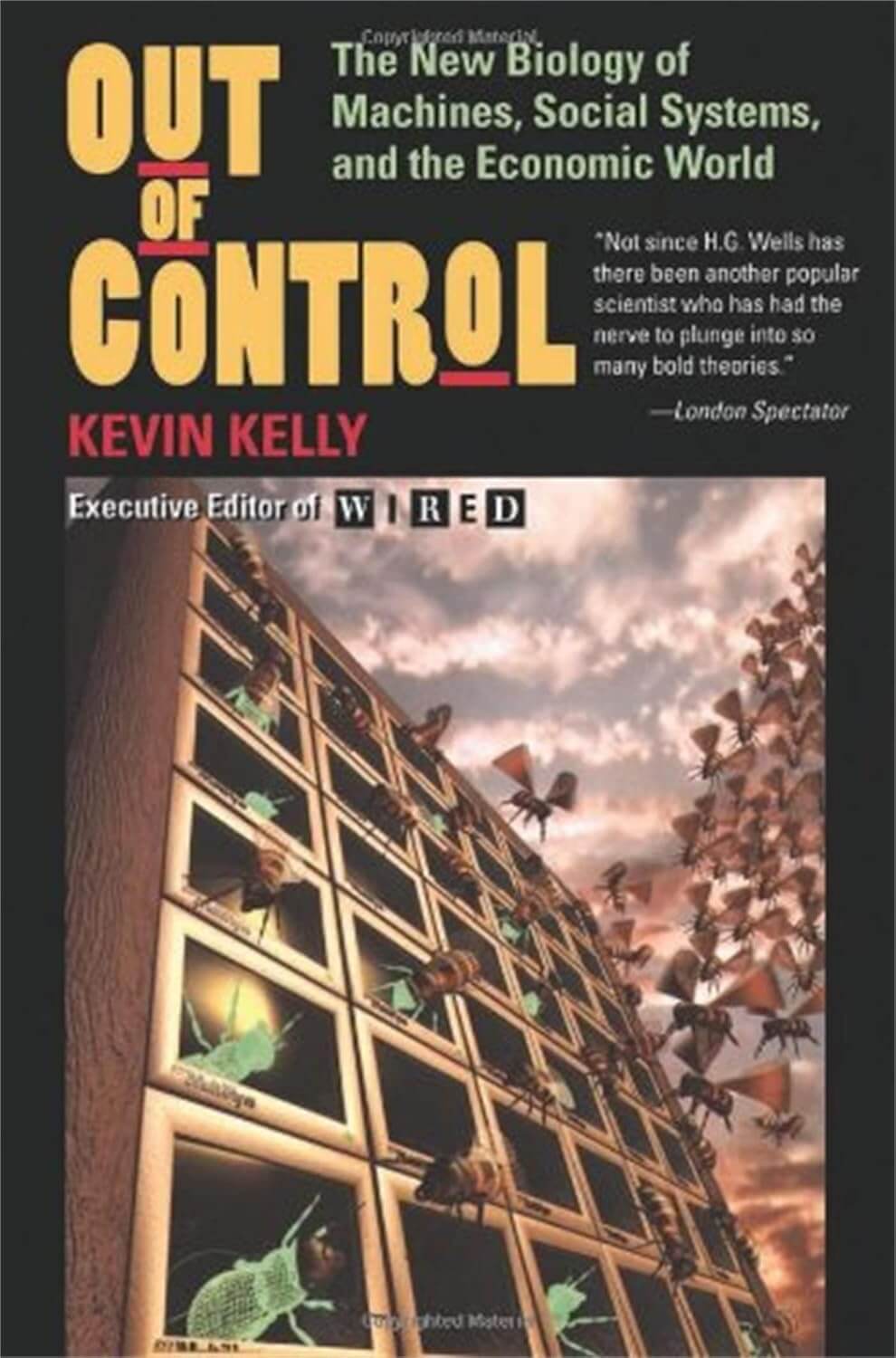
Out of Control: The New Biology of Machines, Social Systems, and the Economic World

Out of Control: The New Biology of Machines, Social Systems, and the Economic World

by Kevin Kelly

Kevin Kelly’s book is an expansive, idea-rich exploration of complex systems, emergence, and the future of technology. Written in the 1990s, it remains striking for how many later developments it anticipates, from distributed intelligence to self-organizing digital networks. Kelly argues that biological and technological systems increasingly resemble one another in their complexity and unpredictability. The book ranges widely across evolution, robotics, economics, and cybernetics, often with infectious enthusiasm. At times it feels more like a manifesto of possibilities than a tightly argued thesis, but that breadth is also part of its appeal. Kelly invites readers to think about control differently—not as top-down management, but as something that emerges from interaction and adaptation. The book’s vision is optimistic, restless, and often provocative. It captures the excitement of a world becoming more connected and less centralized. Even when some examples feel dated, the core ideas remain stimulating.

4.23
Technology
Popular Science
Systems Thinking
Expansive
Provocative
Visionary
Algorithms to Live By

Algorithms to Live By

by Brian Christian & Tom Griffiths

This book takes ideas from computer science and shows how they illuminate ordinary human decisions. Christian and Griffiths explain algorithms for sorting, searching, scheduling, and probability, then connect them to problems like choosing when to stop looking, how to prioritize tasks, and when to trust memory. The result is both entertaining and unexpectedly practical. The authors are excellent at making abstract concepts feel intuitive through everyday examples. The book’s charm lies in its balance: it never claims humans should become machines, but it does show how computational thinking can clarify real life. There is genuine intellectual pleasure in seeing how elegant mathematical ideas map onto messy human choices. The writing is crisp, playful, and smart. Rather than offering simplistic life hacks, the book gives readers better mental models. It’s one of the rare popular science books that is both fun to browse and genuinely useful to think with.

4.12
Popular Science
Technology
Psychology
Clever
Playful
Insightful
The Age of Surveillance Capitalism: The Fight for a Human Future at the New Frontier of Power

The Age of Surveillance Capitalism: The Fight for a Human Future at the New Frontier of Power

by Shoshana Zuboff

Shoshana Zuboff’s book is a sweeping and forceful analysis of how digital platforms have turned human experience into data for profit and control. She argues that surveillance capitalism is not just a business model but a new form of power, one that predicts and shapes behavior at scale. The book is ambitious, theoretical, and often alarming in its implications. Zuboff shows how seemingly convenient services depend on extraction—of attention, behavior, preference, and social life. She is especially strong on naming patterns that many people feel but struggle to articulate. The prose can be dense, but the central argument is urgent and memorable. This is not a neutral overview of technology; it is a warning about democratic erosion and the commercial colonization of daily life. The book asks readers to reconsider what has been traded away in exchange for convenience. It is essential reading for understanding the hidden logic of the digital age.

4.05
Technology
Politics
Social Criticism
Urgent
Serious
Unsettling
The Information: A History, a Theory, a Flood

The Information: A History, a Theory, a Flood

by James Gleick

James Gleick tells the story of information as one of the central ideas of modern life. The book moves from African talking drums and early telegraphs to Claude Shannon, computing, genetics, and the internet. Gleick’s genius lies in making a highly abstract concept feel historically alive. He shows that information is not just data but a way of organizing knowledge, communication, and reality itself. The prose is elegant and engaging, full of surprising connections between disciplines. Shannon’s work becomes a turning point not just in engineering but in culture. The book also captures the dizzying expansion of information in modern life and the philosophical questions that come with it. Gleick is excellent at balancing anecdote, biography, and conceptual explanation. Readers finish with a much richer sense of why information is one of the defining forces of the contemporary world. It is one of the best books for understanding the hidden architecture of the age we live in.

4.04
Popular Science
Technology
History of Science
Intellectual
Engaging
Illuminating
Linked: How Everything Is Connected to Everything Else and What It Means for Business, Science, and Everyday Life

Linked: How Everything Is Connected to Everything Else and What It Means for Business, Science, and Everyday Life

by Albert-László Barabási

Albert-László Barabási’s book introduces network science through a wide range of examples, from the internet to epidemics to social influence. He shows that many systems once thought to be random actually follow identifiable patterns, especially the emergence of hubs and uneven connectivity. The book’s central insight is that relationships often matter more than individual parts. Barabási is particularly good at making large, abstract systems legible through clear metaphors and case studies. The writing has real explanatory energy, and the ideas have broad appeal because they apply across disciplines. Readers begin to see networks everywhere: in biology, business, technology, and culture. The book helped popularize a new way of thinking about complexity in the modern world. It is less about isolated facts than about structures and connections. That shift in perspective is what makes it so powerful.

3.94
Popular Science
Mathematics
Technology
Analytical
Eye-opening
Engaging